
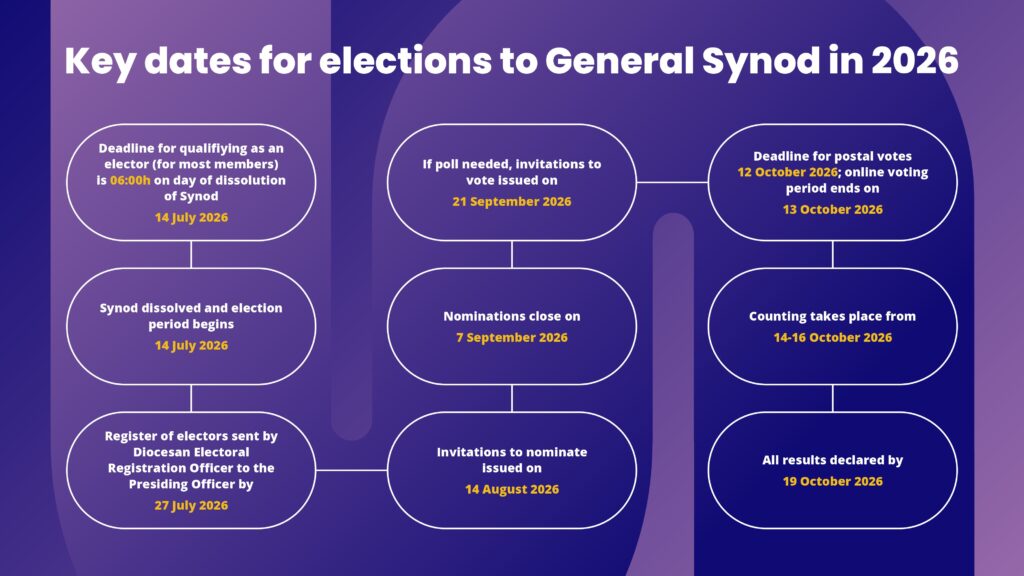
Next week on 14th August, for the 3 weeks until 7th September, is the time when nominations are open for election to General Synod of the Church of England. This is the national assembly of the Church of England. It shapes and approves laws that affect the whole of the Church of England. It agrees new forms of worship, debates matters of national and international importance and approves the annual budget for the work of the Church at national level.
Joining General Synod is a fantastic opportunity to represent the concerns of our community and diocese at the wider CofE level. Those elected will serve for five years. Almost anyone who attends church regularly is likely to be eligible to stand for election as a lay member. (Under FAQs in the Church of England page shown below, you can check if you can stand as a lay member.) And there is a supportive induction programme to help new members in their roles.
General Synod meets for five days, twice a year – once in London and once in York. The role of members is voluntary and unpaid.
Elected members of General Synod include Bishops, clergy and lay people. Most of us who are church members can contribute to this by offering to stand as a lay candidate. Our Diocesan clergy will nominate and elect ordained representatives.
Here is some helpful information about the nomination and election process:
- Eligibility: Contact the diocese to confirm your eligibility.
- Nominations: The diocese will have a nominations form that you need to fill out and that will need to be signed by the people who are nominating you. If you are standing as a lay member, you will then need two people who are members of your Mission Partnership to nominate you. If you are clergy, you will need two other clergy to nominate you. Nominations open on 14 August and close on 7 September. (Deans, Suffragan Bishops, Universities and TEIs, Religious Communities and Armed Forces require nominations from their own constituencies).
- Statements and hustings: You will need to write an election statement and may be asked to record a video or give a short talk at a ‘hustings’ event. Statements and hustings are an opportunity to talk about why you want to be elected and what you could bring to the role.
- Voting: The lay Mission Partnership members in the diocese vote for lay candidates, and the clergy in the diocese vote for clergy candidates. The voting period is 21 September to 13 October.
- Results: If elected, you would come to General Synod for the first time at its meeting in London this November.
Detailed information and guidance is in the attached document (Word or pdf) with links to further guidance. (In the Diocese of Sodor and Man, for ‘Deanery’ read ‘Mission Partnership’)


And here is all the information summarised on one page by the Church of England.