
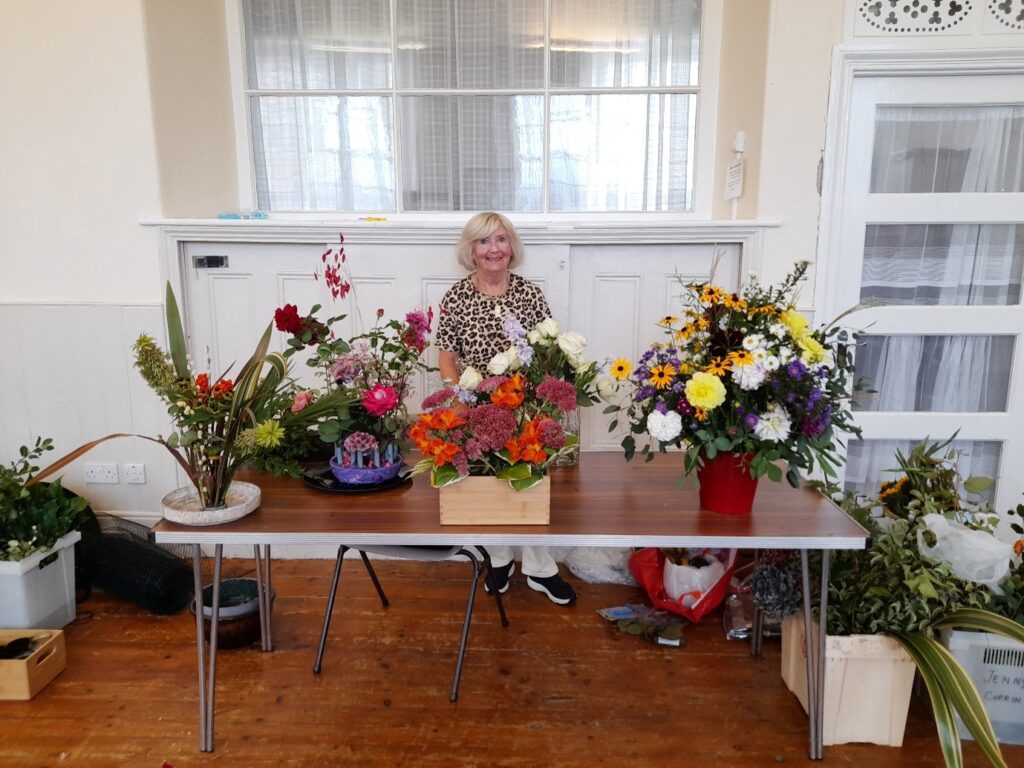
Sustainable Flowers in the Season of Creation
In a packed St John’s Church Hall, representatives from 13 churches gathered on 26 September 2026 for a sustainable flower workshop organised by the Diocese of Sodor and Man as part of a celebration of the Season of Creation.
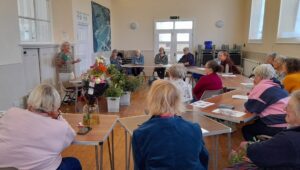
Led by the brilliantly gifted Jenny Corrin, the morning session explored the practical mechanics of flower arranging and how churches can work in harmony with creation. Participants learned how beautiful arrangements can help celebrate the natural world within the churches where we worship, while making choices that are kinder to the environment.
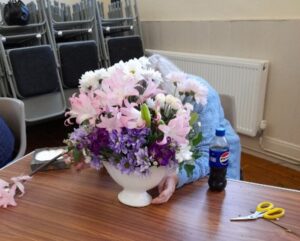
A key focus was the use of floral foam. Designed for a single use, it does not biodegrade. Instead of breaking down safely, it crumbles into tiny, toxic microplastics that persist in our soil and waterways forever. Astonishingly, just one block of standard floral foam contains the equivalent amount of plastic found in roughly 10 plastic bags. The workshop demonstrated that attractive, secure arrangements can be created without floral foam, by using more sustainable mechanics and materials.
Brilliant resource ideas in this booklet.
Flowers bring our churches alive every Sunday. They are visual symbols of creation, resurrection, and the presence of the Holy Spirit and we are grateful to all the volunteers who make this happen. Yet, not only can flower arranging be expensive, but there is also hidden impacts on Creation with imported blooms. Roses, for example, may be transported from as far away as Ethiopia (4,000 miles as the crow flies) and Colombia (5,200 miles) to the Isle of Man.
In comparison to local flowers, the carbon footprint varies dramatically depending on origin and season:
Locally grown, seasonal flowers: 0.1 – 0.5 kg CO₂e per bouquet
Domestic greenhouse flowers (heated): 2 – 4 kg CO₂e per bouquet
Imported flowers (air-freighted): 3 – 9 kg CO₂e per bouquet
The science
For context, 2.7 kg of CO₂ is the average daily carbon footprint of a person in Africa.
Choosing flowers grown closer to home can reduce transport-related emissions and support a more sustainable approach.
Participants were encouraged to look for British-grown flowers in supermarkets, including seasonal choices such as sunflowers and gladioli, and to explore local suppliers. Alexander Nurseries & Florist (Alexander Drive, Douglas) and Lynden Nurseries (Garth Road, Crosby) both stock local (seasonal) flowers (do let me know if you know of other suppliers!). Buying local makes a smaller carbon footprint and, a more affordable option.
The workshop offered practical skills, fresh inspiration and a reminder that caring for creation can be woven into every part of church life. By rethinking materials and choosing locally grown flowers where possible, churches can create joyful displays that honour both worship and the natural world.
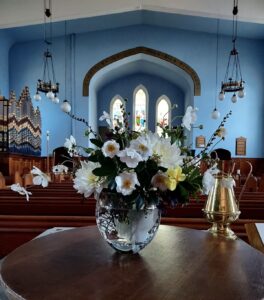
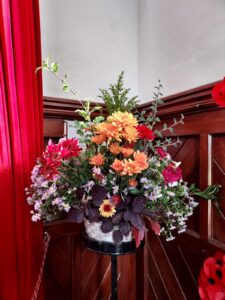
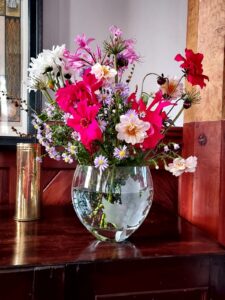
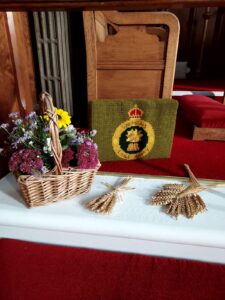
Here are some examples by Janet Brew, who attended the workshop. First, a display she made on the day and then put into the Parish Church. The other three, using the same principles, were among the Harvest Thanksgiving displays.
What does Synod say?
The Church of England is encouraging parishes to embrace eco-friendly flower arrangements. Churches are actively urged to phase out single-use plastic floral foam in favour of seasonal, locally grown blooms. This sets a clear, deeply theological direction in line with the Church’s wider Creation Care and Net Zero carbon goals. By returning to historic, sustainable mechanics like reusable metal flower “frogs” and scrunched chicken wire, congregations are demonstrating that honouring the Creator with beautiful floral displays should never come at the cost of the planet.